
Mobile homes are designed to rest on support systems that keep the structure stable, aligned, and safe. Over time, however, shifting soil, changes in moisture, and natural settling can cause a mobile home to lose its level position. When this happens, small warning signs often appear long before serious structural damage sets in.
Understanding these early indicators allows homeowners to act quickly, protect their investment, and avoid costly repairs. This guide explains how to recognize the first signs your mobile home may need professional leveling and why timely action matters.
Why mobile home leveling is so important
A properly leveled mobile home distributes weight evenly across its support system. When the house becomes unlevel, stress concentrates in certain areas, leading to structural strain and gradual deterioration.
Common causes of leveling issues include:
- Soil erosion or washout after heavy rainfall
- Seasonal ground expansion and contraction
- Aging piers or support blocks
- Improper initial installation
- Long-term settlement of the foundation area
In Florida, fluctuating groundwater levels and sandy soil conditions make routine inspections especially important for mobile homeowners.
Doors and windows that suddenly stick
One of the earliest and most noticeable signs of leveling problems is difficulty opening or closing doors and windows.
You may notice:
- Interior doors rubbing against frames
- Exterior doors that no longer latch properly
- Windows that jam or feel misaligned
These issues occur when the home’s frame shifts slightly, causing square openings to become misaligned. While this may seem minor, it often signals that the home’s support system is no longer evenly balanced.
Uneven or sloping floors
Floors should feel flat and stable underfoot. If you sense a slope when walking through your home, it may indicate settling or movement beneath the structure.
Signs to watch for include:
- Floors slanting toward one side
- Furniture rolling or shifting on its own
- Soft or bouncy areas in certain rooms
Using a simple level tool can help confirm whether floors are no longer even. Persistent slope issues often indicate the need for mobile home leveling services in Florida.
Cracks in walls or ceilings
Cracks in walls or ceilings are often an early visual warning that a mobile home may be out of level. While minor hairline cracks can appear naturally over time, new cracks or ones that continue to widen usually indicate shifting support beneath the home. These issues commonly appear at door and window corners, along ceiling seams, or as vertical lines along interior walls. As the frame adjusts to uneven support, stress concentrates in these areas, allowing cracks to form and expand. Addressing leveling concerns early helps prevent this damage from spreading and affecting the home’s overall structural stability.
Gaps between walls, ceilings, and floors
Gaps between walls, ceilings, and floors often develop when a mobile home settles unevenly and the structure shifts. As supports lose balance, separation may appear where walls meet ceilings, baseboards pull away from floors, or trim no longer sits flush against the wall surface. These gaps are not just cosmetic issues. They signal movement within the home’s frame, commonly caused by unbalanced supports or sinking piers, and indicate that leveling problems may be progressing beneath the structure.
Plumbing issues and drainage problems
Leveling problems can affect more than just structural alignment. Plumbing systems rely on proper slope for efficient drainage.
Warning signs include:
- Slow-draining sinks or tubs
- Gurgling sounds from pipes
- Frequent clogs without a clear cause
An unlevel home can disrupt pipe angles, leading to ongoing plumbing issues that worsen if leveling is delayed.
Exterior signs around the home
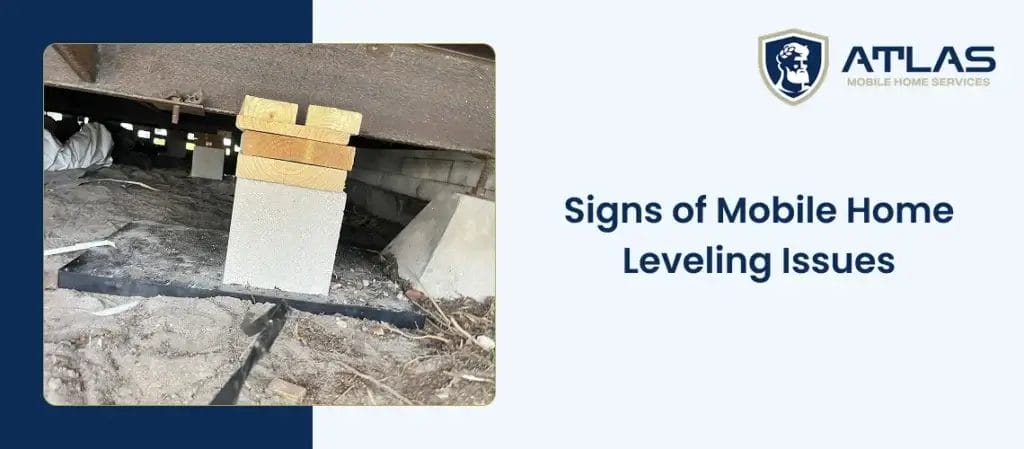
Problems beneath a mobile home often become visible on the exterior long before serious interior damage appears. A visual inspection of the outside and undercarriage may reveal support blocks that look tilted or sunken, uneven gaps beneath the skirting, or noticeable shifting in piers and anchors. These warning signs suggest that the support system is no longer providing consistent stability and that leveling issues may be developing below the home.
Increased wear on structural components
When a mobile home is out of level, stress concentrates in specific areas rather than being evenly distributed.
Over time, this can lead to:
- Warped walls or ceilings
- Premature wear on flooring materials
- Loosened fasteners and joints
Addressing these issues early with a qualified mobile home leveling contractor helps maintain long-term structural integrity.
Why early detection saves money
Ignoring leveling issues allows small problems to escalate into major repairs. What starts as a slight slope can eventually impact framing, plumbing, flooring, and interior finishes.
Early leveling services help:
- Prevent costly structural repairs
- Reduce strain on plumbing and utility lines
- Extend the lifespan of the mobile home
- Improve comfort and safety
Searching for mobile home leveling services near you at the first sign of trouble often results in faster, more affordable solutions.
Professional mobile home leveling services in Florida
When warning signs appear, professional evaluation is essential. Mobile home leveling requires precision, experience, and an understanding of local soil conditions.
Why choose Atlas Mobile Home Services
Atlas Mobile Home Services provides trusted mobile home leveling services in Florida, supporting homeowners in Largo, Pinellas Park, St. Petersburg, and surrounding Pinellas County communities with reliable, professionally executed leveling solutions.
Our services include:
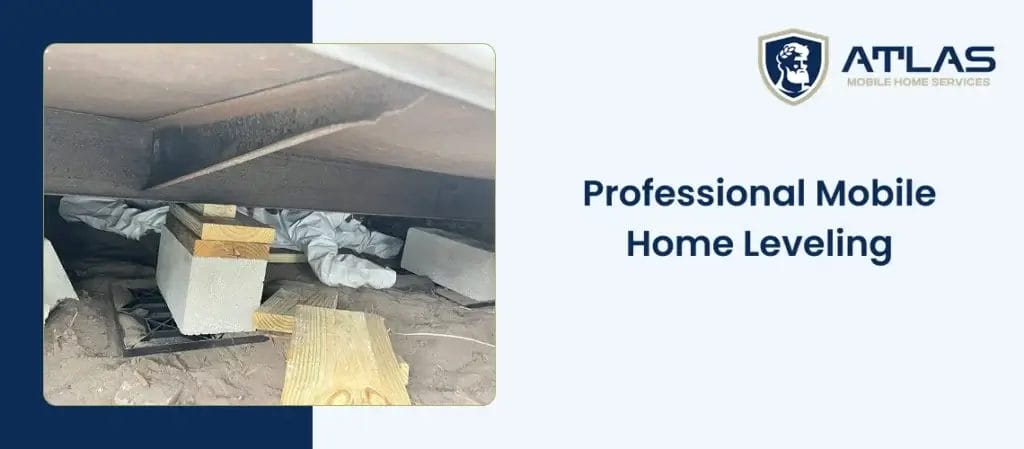
- Mobile home leveling and releveling
- Pier and support adjustments
- Structural alignment inspections
- Long-term stability solutions
With experienced technicians and region-specific expertise, Atlas Mobile Home Services ensures your home is properly supported, balanced, and protected.
Do not wait for small signs to become major repairs. Contact us today to schedule a professional inspection and restore your home’s stability with confidence.
FAQs
1. How often should a mobile home be checked for leveling issues?
Mobile homes should be inspected for leveling issues at least once every one to two years. In areas with heavy rainfall, sandy soil, or frequent weather changes, like Florida, annual inspections are recommended. Homes may also need additional checks after major storms, flooding, or noticeable ground movement. Regular inspections help identify minor shifts early before they cause structural, plumbing, or flooring damage.
2. Can mobile home leveling fix foundation or structural damage?
Mobile home leveling can correct uneven support and prevent further damage, but it does not automatically repair existing structural issues. If problems such as cracked framing, damaged subfloors, or compromised piers are already present, they may require separate repairs before or during the leveling process. Leveling stabilizes the home and creates the proper conditions for long-term structural health.
3. Is mobile home leveling a permanent solution?
Leveling is not always permanent because soil conditions, moisture levels, and natural settling continue over time. However, proper leveling, well-maintained piers, adequate drainage, and regular inspections can keep a mobile home stable for many years. Homes in high-movement soil areas may require periodic releveling as part of routine maintenance.
4. Does mobile home leveling affect utilities, such as plumbing or electrical systems?
Professional leveling is performed gradually to avoid sudden stress on plumbing lines, electrical connections, and ductwork. When done correctly, it actually helps protect these systems by restoring proper alignment and reducing strain. After leveling, utilities may be checked to ensure connections remain secure and functioning properly.
5. How long does a typical mobile home leveling service take?
Most mobile home leveling projects can be completed in a few hours to a single day, depending on the home’s size and the severity of the imbalance. More complex cases involving damaged piers or extensive adjustments may take longer. A professional inspection helps determine the exact scope and timeline before work begins.