
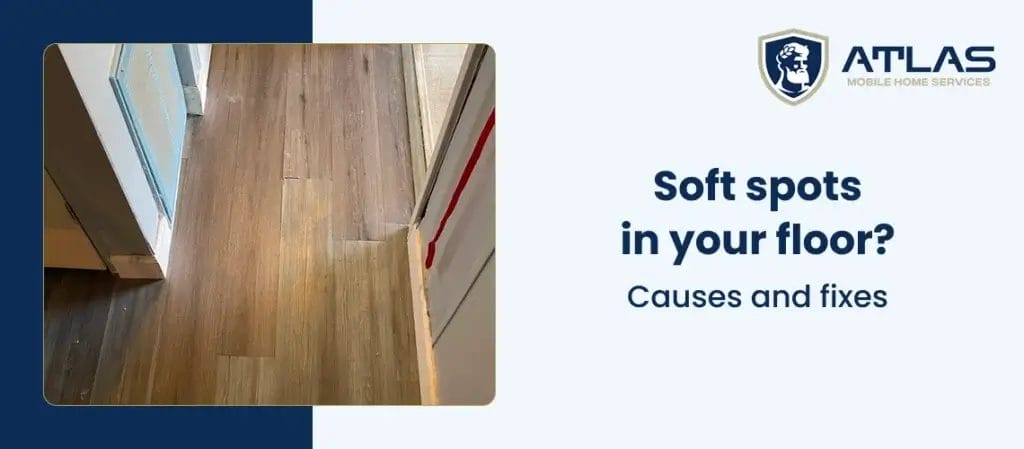
That spongy, bouncy feeling under your feet is not just an annoyance. It is a warning sign that something beneath your flooring has started to break down. If you have noticed soft spots in the floor areas of your mobile home, you are not alone. Thousands of manufactured homeowners across Florida face this exact problem every year, especially in humid coastal regions like Largo and Pinellas County. The good news is that soft floor areas can be diagnosed, repaired, and prevented when you understand what is causing them and when to call in a professional for soft spot in floor repair.
This guide covers everything you need to know: the early warning signs, the root causes behind floor damage, how professionals handle the repair process, what it costs, and how to choose the right mobile home contractor for the job.
What Is a Soft Spot in a Mobile Home Floor?
A soft spot is a floor section that feels weak, spongy, or gives way when stepped on. This happens when the subfloor, usually particle board or OSB, weakens from moisture, age, or structural damage. Instead of a firm surface, the floor flexes downward under your weight, often indicating the need for professional mobile home floor repair.
Not every minor floor flex is a crisis. Manufactured homes are built differently from site-built houses, and slight movement can be normal. But there’s a clear difference between minor flex and a real problem.
Early Warning Signs to Watch For
Look out for these indicators that your subfloor may be compromised:
- Floor feels soft, spongy, or bouncy underfoot.
- Visible sagging or dipping in the floor surface
- Cracking or popping sounds when walking
- Flooring separating from walls or baseboards
- Musty odor near the floor, suggesting mold or mildew
- Visible water stains or discoloration on the flooring
- Floor moves more than 1/4 inch when tested underfoot.
When any of these signs are present, the situation calls for a closer look rather than a wait-and-see approach.
When Does It Become an Emergency?
A soft floor can be dangerous. It signals significant structural weakness below. If the floor moves over a quarter inch, has visible holes, or makes cracking sounds, avoid that area. The subfloor may be close to failing, creating a fall risk, especially for children and older adults. Arrange a professional inspection as soon as possible.
Bottom line: any soft spot larger than a dinner plate or showing multiple warning signs deserves professional evaluation, not a DIY guess.
What Causes Soft Spots in Floor Areas of Mobile Homes?
Soft spots in mobile home floors result from moisture-damaged particle board or OSB subfloors. Florida’s humidity, plumbing leaks, roof damage, or failed vapor barriers allow water to saturate subfloor material. Over time, this causes swelling, weakening, and failure, creating soft areas that worsen if left unrepaired.
The Most Common Moisture Entry Points
Several factors contribute to subfloor deterioration in mobile homes:
- Plumbing leaks beneath sinks, toilets, or water heaters. Even a small, unnoticed drip that lasts for months can saturate the subfloor from below.
- Roof leaks are particularly prevalent in older homes where flashing and seals have deteriorated over the years.
- Failed vapor barriers. A vapor barrier is a plastic sheet installed between the ground and the underside of the mobile home. It blocks ground moisture from rising into the floor structure. When it tears, shifts, or degrades, moisture moves directly into the subfloor.
- Pest damage. Termites and other wood-boring insects can weaken floor joists and subfloor panels from the inside out, making sections soft before any surface damage is visible. In severe cases, damage can extend to the underbelly of the mobile home.
- Aging particle board. Many mobile homes in the Largo and Pinellas County areas were built decades ago with particleboard subfloors. Particle board absorbs water aggressively, and once saturated, it swells, crumbles, and loses all structural integrity. It cannot be dried out and restored. It has to be replaced.
Why Florida Homeowners Are Especially at Risk
Florida’s high humidity, rainfall, tropical storms, and aging manufactured homes make it especially prone to floor damage.
Pinellas County, in particular, has a large number of mobile home communities with homes that are 20 to 40 years old. Many of these homes still have their original particleboard subfloors, which were never designed to withstand decades of Florida’s moisture. Homeowners in Largo, Clearwater, St. Petersburg, Dunedin, and Safety Harbor all face elevated risk due to the coastal humidity and storm exposure common across the county.
Hurricane events like Ian and Idalia caused widespread water intrusion in mobile homes across the region. Even homes that avoided direct storm damage often experienced flooding in the crawl space or damage to skirting and vapor barriers, allowing moisture to accumulate beneath the floor.
Florida’s climate constantly threatens your subfloor, so regular inspection and early intervention are essential.
DIY vs. Professional Repair: Which One Makes Sense?
Not every soft spot requires a full contractor crew. But knowing where to draw the line between a DIY patch and a professional soft spot in floor repair is critical for your safety and your wallet. Here is how the two approaches compare:
| Factor | DIY Repair | Professional Repair |
| Best For | Small spots under 12 inches | Structural damage, large areas, multiple spots |
| Cost Range | $50 to $200 (materials only) | $300 to $5,000+ (materials + labor) |
| Durability | Temporary fix, may fail within months | Lasting repair with proper materials |
| Moisture Source | Must be resolved first by homeowner | Identified and resolved as part of process |
| Insurance Impact | May void coverage if done incorrectly | Licensed work supports claims |
| Joist Inspection | Not typically possible without tools | Included in professional assessment |
The Risks of Going the DIY Route
DIY subfloor repairs in mobile homes carry risks that are easy to underestimate. Mobile home floors distribute weight differently than site-built homes, and cutting into the subfloor without understanding the joist layout can create new structural weaknesses.
If moisture persists or the cause isn’t fixed, any patch will soon fail. Insurance may not cover damage from unlicensed work, especially if a DIY repair made things worse.
Bottom line: DIY works for minor, isolated soft spots with no moisture source. Anything beyond that needs a professional.
How Professionals Fix Soft Spots in a Mobile Home Floor
A professional mobile home repair process for soft floors follows a structured sequence designed to address the root cause rather than just the visible symptom. Proper soft spot in floor repair ensures long-term durability and safety.
Step-by-Step Repair Process
Here is what the professional repair process typically looks like:
- Inspection. A technician examines the floor from both inside the home and from the crawl space below. They use a screwdriver probe test to identify the boundaries of each soft spot and moisture meters to measure water damage. Readings above 18 percent moisture indicate material that is at risk or already compromised.
- Moisture source identification. Before any repair begins, the source of the moisture, whether a plumbing leak, roof issue, or vapor barrier failure, must be identified and resolved.
- Flooring removal. The flooring material on top (vinyl, carpet, or laminate) is carefully removed to expose the subfloor beneath.
- Damaged subfloor removal. All compromised subfloor panels are cut out using a circular saw and removed. This step often reveals whether the damage extends into the floor joists.
- Joist inspection and repair. If joist damage is found, the affected sections are reinforced or replaced before the new subfloor is installed. Skipping this step is one of the most common mistakes in low-quality repair work.
- Vapor barrier replacement. The vapor barrier beneath the home is inspected. If it is torn, missing, or degraded, it is replaced with new six-mil polyethylene moisture-blocking sheeting.
- New subfloor installation. New 3/4-inch moisture-resistant plywood (CDX grade or better) panels are installed with tongue-and-groove edges for a tight, stable fit.
- Flooring reinstallation. The flooring material is reinstalled over the new subfloor, completing the repair.
Materials Used in Subfloor Repair
When dealing with soft spots in floor sections of a mobile home, the right material choice is what separates a lasting repair from a recurring problem. Three-quarter-inch tongue-and-groove plywood rated for moisture resistance (CDX grade or better) is the most common and durable replacement material. In Florida’s humid climate, marine-grade or pressure-treated plywood is strongly recommended near bathrooms and exterior walls.
Some contractors use OSB with a waterproof coating as a cost-effective alternative, though plywood remains the preferred choice for long-term durability. Vapor barrier replacement uses six-mil polyethylene sheeting, the standard for ground moisture blocking in manufactured homes.
Patching vs. Replacing: What Is the Difference?
Patching fills or reinforces a small damaged area without removing the old material. It is a short-term solution that works for minor surface-level weakening. Subfloor replacement involves removing all damaged panels and installing new plywood or OSB. This is a permanent fix. For water-damaged areas, replacement is almost always the correct approach, as patches cannot restore structural strength to saturated particle board.
Bottom line: a professional repair addresses moisture, structure, and materials together. That is what makes it last.
How Much Does Mobile Home Floor Repair Cost in Florida?
Cost is one of the first questions homeowners ask, and the answer depends on the extent of the damage. Here is a general breakdown for the Largo and Pinellas County area:
| Repair Type | Cost Range | Typical Scope |
| Minor patch repair | $300 to $800 | Single small soft spot, basic moisture check |
| Partial subfloor replacement | $800 to $2,500 | Larger damaged section with vapor barrier work |
| Full-room subfloor replacement | $2,000 to $5,000+ | Entire room, joist repair, full vapor barrier |
Disclaimer: The prices mentioned are indicative and may vary based on site conditions, inspection findings, design specifications, and material requirements.
What Affects Your Final Cost
Several factors influence where your repair falls within these ranges:
- Total square footage of damaged subfloor
- Whether floor joists need repair or reinforcement
- Type of replacement material selected
- Condition and accessibility of the crawl space
- Whether the vapor barrier needs full replacement
Getting a written estimate from a licensed contractor before work begins is always the smart move.
How Long Does Mobile Home Floor Repair Take?
A small soft spot patch can take 4 to 8 hours. A partial subfloor section replacement typically takes 1 to 2 days. A full-room or whole-home subfloor replacement may take 3 to 5 days, depending on access, materials, and the condition of the floor joists.
Does Insurance Cover Mobile Home Floor Repair?
It depends on the cause. If the damage resulted from a sudden covered event, such as a burst pipe, appliance failure, or hurricane damage, most mobile home insurance policies will cover subfloor repair. Gradual moisture damage caused by slow leaks or long-term neglect is typically excluded.
If you believe your damage may be covered, document everything with photos and notes before any work begins. Identify the cause of the moisture and contact your insurance provider to discuss the claim before starting repairs.
Not sure if you need a repair or full replacement? Our experts inspect for free. Call Atlas Mobile Home today.
Bottom line: most single-room repairs in Florida fall between $800 and $2,500 when handled by a licensed contractor.
Why the Right Mobile Home Contractor Matters
Choosing mobile home contractors who specialize in manufactured housing is not optional for this kind of work. Services like mobile home leveling, skirting, and anchoring often go hand-in-hand with floor repairs.
What to Look for in a Contractor
When evaluating contractors in the Largo and Pinellas County area, prioritize these qualifications:
- A valid Florida DBPR (Department of Business and Professional Regulation) license
- Proof of liability insurance and BBB accreditation
- Verifiable Google reviews that mention specific repair work
- A willingness to provide a free written estimate before starting
- Experience with HUD Code standards for manufactured homes (24 CFR Part 3280)
- Transparent communication about timelines, materials, and pricing
What to Expect from a Professional Floor Inspection
A proper inspection covers both the interior floor surface and the crawl space beneath the home. The technician uses moisture meters to identify hidden water damage, checks joist integrity, evaluates the condition of the vapor barrier, and looks for signs of pest activity or underbelly damage.
This inspection is the most reliable way to determine whether soft spots in floor areas are surface-level issues or signs of more serious structural damage that needs immediate attention.
After the inspection, you should receive a clear explanation of the findings and a written estimate that outlines the scope of work, materials, timeline, and cost. No surprises. No pressure.
Bottom line: a contractor who specializes in manufactured homes will catch problems that a general contractor will miss.
Don’t Wait. Act Before the Damage Spreads.
Soft spots in the floor areas of your mobile home will not fix themselves, and they will not stay the same size. Moisture damage is progressive. What starts as a single spongy section today can become a full-room subfloor failure within a year if left unaddressed. The earlier you act, the smaller the repair scope and the lower the cost.
Proper mobile home maintenance starts with paying attention to the warning signs and acting on them before the problem grows. A professional inspection is the fastest way to understand what is happening beneath your floor and what it will take to fix it through proper soft spot in floor repair.
Atlas Mobile Home Services: Trusted Floor Repair Experts in Florida
At Atlas Mobile Home Services, we specialize in soft-spot inspections and repairs for manufactured homes across Florida. From our base in Largo, we’ve helped hundreds of homeowners restore safe, solid flooring in Largo and St. Petersburg.
We focus exclusively on mobile home flooring systems, which means we don’t just treat the surface; we identify the root cause of soft spots and fix them properly. Whether it’s a small repair or a full subfloor restoration, we use moisture-resistant materials designed to handle Florida’s humid climate and prevent future issues.
What We Bring to Every Job
- We bring experienced technicians who specialize in mobile home floor repair
- We use high-quality, moisture-resistant materials suited for Florida conditions
- We provide transparent pricing with clear, honest communication
- We deliver long-lasting repairs backed by professional workmanship
- We offer free inspections and written estimates with no obligation
Our process is simple and thorough. We inspect your flooring, assess moisture levels, determine whether reinforcement or replacement is needed, and repair the issue at its source. We don’t believe in temporary fixes; we restore a strong, level floor that’s safe for your home.
Get Your Free Inspection Today

If you’ve noticed soft, bouncy, or spongy areas in your floor, it’s time to take action. If you’re searching for “mobile home repair near me”, our team is here to provide the right solution with expert care.
Contact us today to schedule your free inspection and get a clear, honest assessment, no pressure, just the right solution for your home.
Frequently Asked Questions
1. Can I fix a soft spot in my mobile home floor myself?
Small soft spots (under 12 inches) with minimal damage can sometimes be filled using a floor repair compound. However, if the subfloor is water-damaged or structurally compromised, DIY repairs are at best temporary and at worst unsafe. Professional replacement of the affected subfloor panels is the recommended long-term fix.
2. How long does it take to repair a mobile home floor?
A small soft spot patch can take 4 to 8 hours. A partial subfloor section replacement typically takes 1 to 2 days. A full-room or whole-home subfloor replacement may take 3 to 5 days, depending on access, materials, and the condition of floor joists.
3. How do I know if the floor joists in my mobile home are damaged?
Signs include floors that flex or bounce significantly underfoot, soft spots spanning more than 2 feet, visible sagging when viewed from outside the home, or rotted wood visible from the crawl space. A professional inspection using moisture meters and visual assessment of the underbelly can confirm whether joist damage is present.
4. What is a vapor barrier, and why is it important for mobile home floors?
A vapor barrier is a plastic sheet installed under the mobile home between the ground and the subfloor. It blocks ground moisture from rising into the floor structure. In Florida’s humid climate, a damaged or missing vapor barrier is the number one cause of subfloor rot and soft spots. Replacing it is a key part of any floor repair.
5. Can soft spots in my mobile home lead to mold?
Yes. Prolonged moisture in the subfloor creates an ideal environment for mold and mildew growth. Mold can spread to wall cavities, insulation, and HVAC ducts if not addressed. If you smell a musty odor in soft-floor areas, treat it as an urgent repair for both structural integrity and indoor air quality.
6. What is the difference between patching and replacing a mobile home subfloor?
Patching fills or reinforces a small damaged area without removing the old material. It is a short-term solution. Subfloor replacement involves removing all damaged panels and installing new plywood or OSB, which is a permanent fix. For water-damaged areas, replacement is almost always the correct approach, as patches cannot restore structural strength to saturated particle board.